

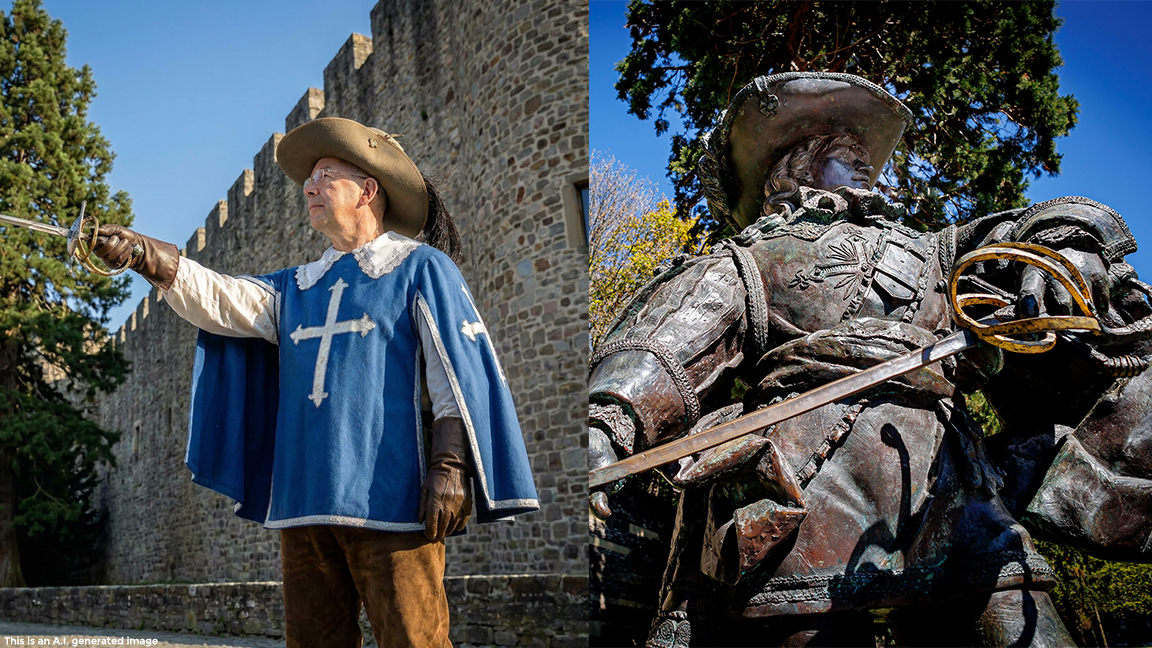
The fierce standoff between the Municipality of Maastricht and a renowned local archaeologist has reached a dramatic climax. Following a police raid and an arrest, the hijacked bones, alleged to belong to the legendary French musketeer D’Artagnan, have finally been surrendered.

The March Discovery
To understand how we got to this point, you have to look back at what happened earlier this year. In early March 2026, an excavation beneath the Sint Petrus en Pauluskerk in Wolder struck historical gold. Researchers uncovered a grave containing a skeleton, a French coin, and musket ball fragments.
Because the real life D’Artagnan famously died from a musket shot to the throat during the 1673 Siege of Maastricht, historians held their breath. Did they finally find him? To confirm the identity, the fragile bones, specifically an upper arm bone and two teeth, were carefully transported to the Institute for Legal Medicine in Munich for advanced DNA testing.
“You Do Not Put D’Artagnan in the Mail”
The chaos started when the Munich laboratory finished their testing. The Municipality of Maastricht casually requested that the German institute return the priceless historical remains via a registered postal package. Local archaeologist Wim Dijkman, who considers himself the lead researcher of the project and has spent decades studying the musketeer, was absolutely appalled by the risk.
Arguing that you cannot just put a world class archaeological find in the mail and pray the bones do not arrive in smithereens, Dijkman went rogue. Around May 6, without the city giving permission, Dijkman drove to Munich, convinced the university to hand the remains directly to him, and personally transported them back to the Netherlands where he locked them away in a secret safe.
The Ultimatum Ends in Arrest
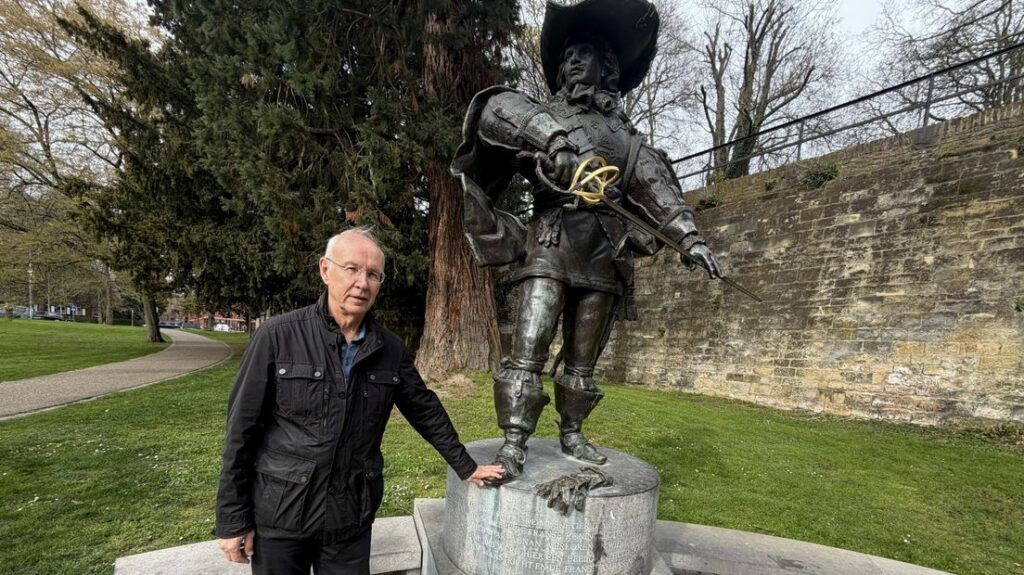
The municipality was furious. Alderman Frans Bastiaens publicly condemned the rogue retrieval and stated that Dijkman acted entirely without authorization. While the city initially threatened legal action if the bones weren’t returned by Friday, the situation escalated much faster than anticipated. On Monday, the Heritage Inspectorate, accompanied by the police, paid Dijkman a visit.
However, he no longer had the remains at his house and refused to reveal their secure location. This defiance led to Dijkman’s official arrest on Wednesday. Late Wednesday evening, the standoff finally broke. Dijkman was released from the police station, but only after he relented and handed over the skeletal remains to the authorities.
The Aftermath
While the bones of history’s most famous musketeer are finally in the municipality’s possession, the archaeologist’s legal troubles are just beginning. Dijkman remains an official suspect in an ongoing criminal investigation regarding the incident and was ordered to report back to the police station on Thursday morning.
Deep Dive: Who Legally Owns the Bones?
- The Permit Failure: The absence of a valid municipal permit is the most critical factor in this dispute. Under Dutch law, professional archaeological excavations are strictly regulated. Digging without a permit essentially invalidates the researcher’s professional standing regarding the find and strengthens the municipality’s claim that the excavation was unauthorized.
- The Government Always Wins: Under the Dutch Heritage Act of 2016 the rules are absolute. The moment an artifact is unearthed during a professional dig the legal owner instantly becomes the government. The archaeologist is legally viewed as just a contractor working for the state.
- The Moral Dilemma: Dijkman believes legal ownership does not mean the government is competent. When the city suggested mailing a 350 year old global treasure via standard post, he viewed the bureaucracy as a threat to the artifact. To him, the moral duty to protect the bones overrides the legal right to own them.
- The Accidental Loophole: There is a bizarre twist in Dutch civil law called a Toevalsvondst or accidental find. If a random citizen is planting a tree in their garden and accidentally digs up a Roman pot of gold the municipality does not automatically own it. Ownership is split right down the middle between the finder and the landowner. However since Dijkman was doing a professional dig he cannot claim this loophole. Legally he stole government property.
Source: RTV Maastricht, L1nieuws