
We Limburgers really have our own language, or rather, our own dialects. Some words are so intertwined with our daily speech that we sometimes forget whether they are actually Limburgish or Dutch. Today, I’m sharing my personal experiences, and I’m curious if you recognize them!
Many Limburgers are raised with the Limburgish language. Although I understand it well and spoke it for a while in the past, my parents always spoke to me in Dutch due to their mix of North and South Limburgish backgrounds. Still, besides my accent, there are several words that immediately gave away my roots to the rest of the Netherlands.
“Hè wat?!”
Watblief
I remember well how often my mother corrected me when I said ‘hè’ or ‘wat’ (what), as that wasn’t considered polite. If I hadn’t heard someone correctly, I had to say ‘watblief’. For years, well into my thirties, I thought this was a standard Dutch word. In Limburgish, people often say ‘watbleef’ or ‘wableef’, so I assumed ‘watblief’ was the proper Dutch version. Apparently, it stems from the Dutch ‘wat belieft u’ (what would please you), a rather old-fashioned expression rarely used anymore. If you say ‘watblief’ in the north, they might understand you, but they’ll likely realize immediately that you’re from the south.
“They looked at me as if I were speaking Chinese”
Foetelen
No, I don’t mean ‘foeteren’ (to grumble), but ‘foetelen’. When I started studying in Brabant in my early twenties, I discovered that not everyone understood this word. I used it mid-conversation, and my classmates looked at me as if I were speaking Chinese. It felt quite strange because I was convinced it was a normal Dutch word. I then explained, quite surprised, that I meant ‘valsspelen’ (cheating at a game).
Beurs
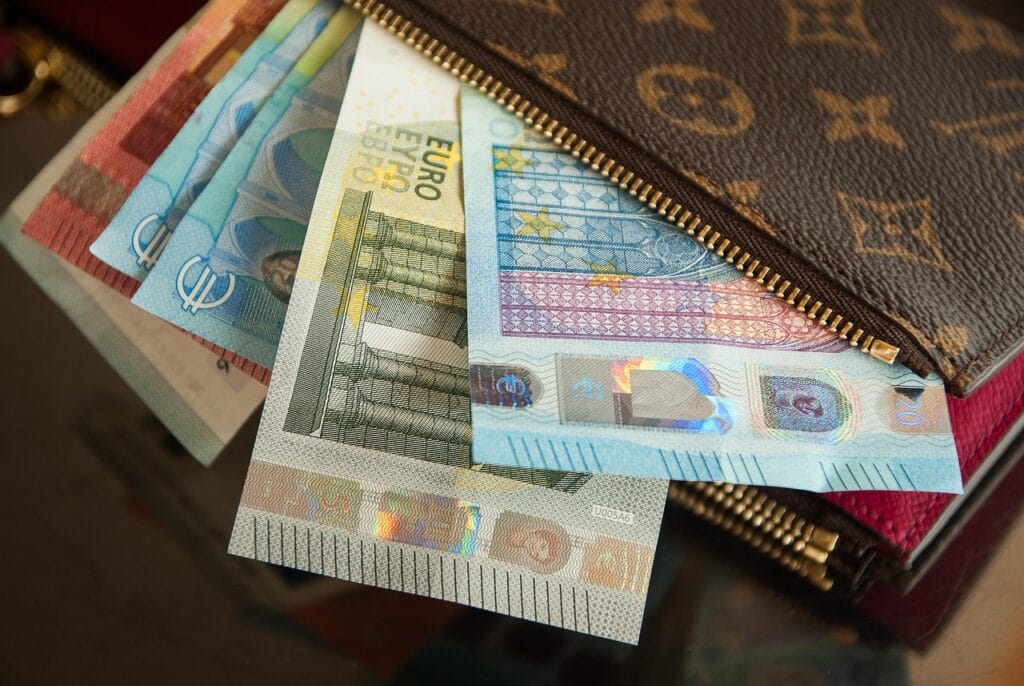
I think you know what I’m talking about. Not the stock exchange or a trade fair, but the ‘beurs’ in your bag or pocket! Exactly: your wallet. I once heard a funny story about this misunderstanding: someone lost their ‘beurs’ in the Amsterdam Arena. A few days later, they called to ask if the ‘beurs’ had been found. The lady on the phone in Amsterdam didn’t know what they were talking about at first, but when the penny dropped, she said with a thick Amsterdam accent: “Oh, you mean a portemonnee!”. You can probably imagine how that Amsterdam accent sounds to our Limburgish ears.

Wist je dat:
- The word ‘beurs’ is much older than ‘portemonnee’. It derives from the Latin bursa, meaning ‘leather bag’ or ‘pouch’.
- ‘Portemonnee’ is a French loanword (porte-monnaie). In the 19th century, it was fashionable in large parts of the Netherlands to use French words. In the Randstad (the urban west), ‘portemonnee’ became the standard, but in the south of the Netherlands and Flanders, people stuck to the original term. So, technically, we are the originals! 😉
“Ziede geej onder?”
North-Limburgish (Ben je beneden? Are you downstairs?)
“Ich kom noa ónger!”
South-Limburgish (Ik kom naar beneden! I’m coming downstairs!)
Naar onder
‘Van onderen!’ That means something else entirely (Look out below!). “Are you downstairs?” or “I’m coming downstairs!” are phrases that were often shouted at our house using the word ‘onder’. As I grew up, I realized this wasn’t grammatically correct in Dutch, but the phrasing still sticks as an old habit. In Limburgish, it’s used as ‘noa ónger’, and it descends from Germanic languages. The latter is also reflected in the English ‘under’ and the German ‘unter’. ‘Beneden’ is a more complex Dutch word, and Limburgish often sticks to traditional, direct naming. For many Limburgers, this is the standard; some might only now be discovering while reading this that it should officially be ‘naar beneden’. “But we live in Limburg, we speak Limburgish there!” as we like to say.


Pupsje
I seriously had to Google how to say this word in Dutch. More than ten years ago, during an internship, I heard someone call it an ‘oogsnotje’ (eye snot), another called it ‘pupsj’. A whole discussion ensued among colleagues about the proper term. According to Gemini, it’s called ‘slaap’ (sleep) or ‘oogdrek’ in Dutch, but I’m curious which word you use. In any case, I have a ‘pupsje’ in my eye when I wake up in the morning.
Are there any words you use daily in Dutch conversations, only to discover later in life that they are ‘typically Limburgish’? I’d love to hear them! Maybe we can learn something from each other.